

Juneteenth’s DEI Ain’t Freedom
“Diversifying” an economy already obsessed with Blackness is futile. Ownership, not inclusion, is the key to our liberation.

I. “McDonald’s: Niggas Love It”*
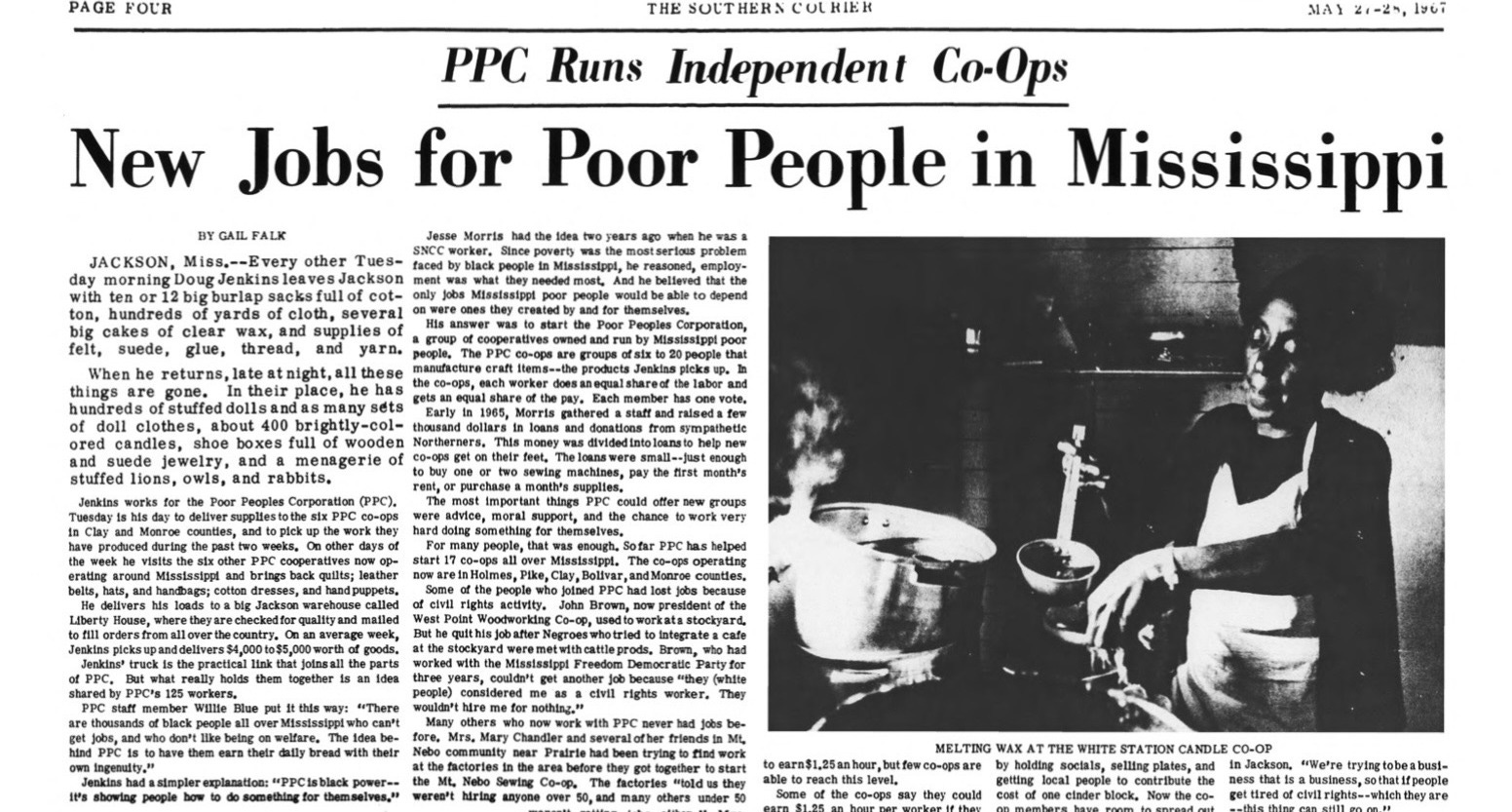
There was always something surreal about DEI, something absurd about activists asking brands like Nike and Popeyes to become even Blacker. Did not Bernie Mac and Dick Gregory star in Nike ads as a preacher and a griot to sell sneakers for LeBron James and Kevin Durant? Didn’t Popeyes, as Katt Williams put it, grease up Jerry Rice to look like Scatman Crothers in a commercial selling a fried chicken football helmet? Wasn’t the climax of this year’s Levi’s Super Bowl ad a close-up of Doechii’s ass twerking to James Brown’s “Get Up Offa That Thing” as she flipped her beaded cornrows?
The paradox of DEI is this—it assumes there is a rift between Black America and Corporate America when there is, in fact, a toxic situationship.
Adidas swept us off our feet long ago, and Black family reunions have crushed on orange soda for generations. Black New Yorkers tied the knot with Timberlands way back in the ‘90s, and Hennessy has seduced us for many a nightcap since the Barack Obama inaugural bottle. Under these conditions, it’s untenable to ask a company like Amazon to “meet us where we are” when they’re already sending fleets of Black teenagers into every neighborhood from Brooklyn to Bankhead. Just as it is ludicrous to ask companies like New Balance to “walk a mile in Black folks’ shoes” when they’re already selling millions in Cocoa Golf’s signature sneakers.
If there is any legitimacy in the fledgling crusade for Diversity, Equity and Inclusion, it lies entirely in the demand for equity—entirely in the demand for ownership. Black folks cannot “diversify” an economy which already fetishizes Blackness. Nor can we “include” ourselves in an economy already dependent on our labor. However, the restructuring of ownership does stand to meaningfully transform capitalism, and it has long been at the center of what Black radicals have imagined as economic liberation.
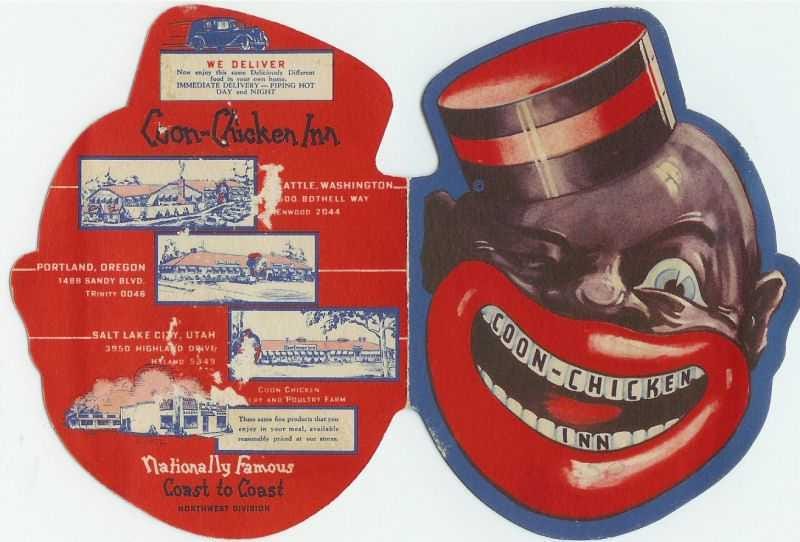
Throughout the freedom struggle, the most astute Black activists understood that universalizing and democratizing ownership was a prerequisite to freedom. This is why, when the Movement for Black Lives released its 2016 platform, it argued that big banks should invest in cooperative ownership. It’s why during the Black Power era, Stokely Carmichael articulated Black Power as the idea of cooperative ownership. It’s why during the civil rights movement, Martin Luther King made the case for the democratization of wealth and investment, and it’s why in Black Reconstruction, as W.E.B. Du Bois put it, formerly enslaved people sought to erect an “industrial democracy.”
For centuries, Black folks have imagined freedom not as integration into the economic hierarchy but as its deconstruction.
This Juneteenth, we are called to celebrate not just the end of slavery but to rediscover the meaning of liberation. Liberation is not just the freedom to shop, the freedom to buy Walmart Juneteenth ice cream, and Juneteenth paper plates at Dollar Tree; it is the construction of an economy free from racialized domination. Liberation is expanding ownership to all workers. It is an economy where Lyft drivers steer their own course and agricultural workers reap what they sow; where Amazon pickers pick their own hours and Walmart cashiers are no longer strapped for cash; where WNBA shot makers call the shots in front offices and the Black women working in Jimmy Dean’s warehouses finally get to bring home the bacon.
Juneteenth, our Black Jubilee, asks all of us to imagine a world where workers enjoy the fruits of their labors, a world where—as the Black Panthers put it—corporations are “taken from the businessmen and placed in [the hands of] the community so that the people of the community can organize and employ all of its people and give a high standard of living.”
II. “There’s enough for everyone.”*
If one accepts the premise that a free economy is one where the workers who make the goods also make the decisions (and make the money), then the question is, how do we make all this work?
Perhaps the most practical plan comes from the Swedish economist Rudolf Meidner, whose 1975 proposal called for transferring ownership of Sweden’s corporations to laborers through an annual stock transfer. Meidner’s scheme planned for workers to be paid in company stock over decades; this transition would gradually endow workers as majority shareholders over 5 to 10 years and eventually as outright owners of the entire economy.
In Belgium, sociologist Isabelle Ferreras proposed a plan of economic bicameralism that reorganizes corporations into bicameral houses, like the House and Senate in Congress, with capital under one house and labor under another, sharing co-management of firms. Bicameralism offers laborers a chance to gain operational experience as they shift from working shifts to worker ownership. Or, as researcher Simon Pek put it, bicameralism serves “as a transition phase from capital investor–owned firms to worker cooperatives.”
In the United States, shifting from capitalism to cooperativism has long loomed as a central goal of the Black freedom struggle. As Robert Allen wrote in 1969’s Black Awakening in Capitalist America, many organizers saw economic cooperatives as “the salvation of the Black community.” In Allen’s final chapter, “Towards a Transitional Program,” he follows Du Bois’s ideas, writing that “the principle of democracy must be applied to economic relations.”
While the Black Left floundered after Black Awakening, the quest for a just transition towards an emancipated economy continued globally. Today perhaps the most well-articulated vision for a mature solidarity economy resides in Spain’s Mondragon, a vast network of worker cooperatives generating billions in annual revenue.
Writing of Mondragon, CUNY economist Jessica Gordon Nembhard traced parallels to the Black experience, noting that “both the Basque of northern Spain and African Americans experience contradictory relationships in their societies as national minorities—citizens without full citizenship rights, experiencing long histories of exploitation, inequality, and social ostracism.” Gordon Nembhard contends Mondragon’s success shows “We can work together and fashion a new society that delivers prosperity for all through worker cooperatives” by understanding “economics as a project of human liberation.”
Mondragon inspired the vision behind Cooperation Jackson in Mississippi, where Black workers hope to create their own cooperative federation.
If Cooperation Jackson replicates Mondragon’s success, it would create an economy where Black shoppers could take pride, not only in who owned Black businesses, but in how Black businesses are owned. It would create sectors where Black workers had no owners, no masters, no monopolists, no plutocrats telling them what to do—an economy where laborers lavished themselves with luxurious public goods; where we looked each other in the eye without fearing being fired; where we held political opinions without fearing eviction; where we didn’t live paycheck to paycheck; where we all shaped the policies cocreating access to food, water, shelter, and income. This is not a world in which a single man wields a trillion dollars, but a world in which people wield trillions for the benefit of all.
Sadly, mutualism is not the current paradigm of Black politics. In a political culture dominated by Barack Obamas and Jay-Zs, current Black discourse on freedom is inherently capitalist, seeing liberation not as destruction of the oligarchy but as integration into it. It is a vision of “freedom” based on a culturally competent oppression, based on a never-ending stream of inclusive imagery, and on the seductive diversity that is now threatening to swallow the Black radical tradition whole.
III. “Typing Out Woke Ass Tweets On Phones Made By Child Slaves”*
To many, Blacks playing footsie with multinational firms is Black Excellence. However, the problem with Morehouse’s Ralph Lauren letterman jackets and Spelman’s Air Max 95s is not just that Blacks are made slaves to a fashion but that the fashion is made by slaves. How can we honor runaway slaves with running shoes made by slave labor—with “Juneteenth” Jordan 12s sewn by 12-year-olds in Vietnamese sweatshops? How can we celebrate our escape from slave ships by dropshipping black, red, and green t-shirts sewn by Uyghurs imprisoned in Chinese work camps? How can we pledge loyalty to the brands that once branded us and to the conglomerates that continue to exploit laborers worldwide?
In his surrealist novel Slumberland, satirist Paul Beatty writes of a world where “there will be no races, no ethnicities, only brands. People will be Nikes or Adidas. Microsoft or Macintosh. Coke or Pepsi.” In our world, where Papa John’s slogan is “Better get you some,” and Wendy’s tagline is “It’s giving,” and Old Spice runs commercials with Black moms standing on the roof singing Boyz II Men’s “End of the Road,” it feels as if we already have entered Beatty’s bizarre universe where races and brands have melded. Perhaps the ultimate tragedy is that while Blacks still identify ourselves with liberation, the brands we align with are the most prolific practitioners of domination, wage theft, stingy benefits, unsafe workplaces, and constant surveillance.
We cannot at once claim to be the progenitors of liberty, as we align ourselves with corporate tyrants; we cannot be like the white founders, who amassed their wealth on sugar plantations while claiming to live in a “sweet land of liberty.”
If Juneteenth means anything, it means aligning ourselves with the values of liberation and emancipation; it means committing ourselves to business models that do not exploit the labor of others but that empower all laborers. This is the vision that our ancestors called for. This is the vision of abolition democracy: one that takes republican principles of freedom and ties them to the land and labor, one that uses the democratic power of choice to turn beggars into choosers, to turn a ravenous economy that feeds on people into one that feeds them, one that makes workers’ bellies and hearts full.
We cannot go on as we have.
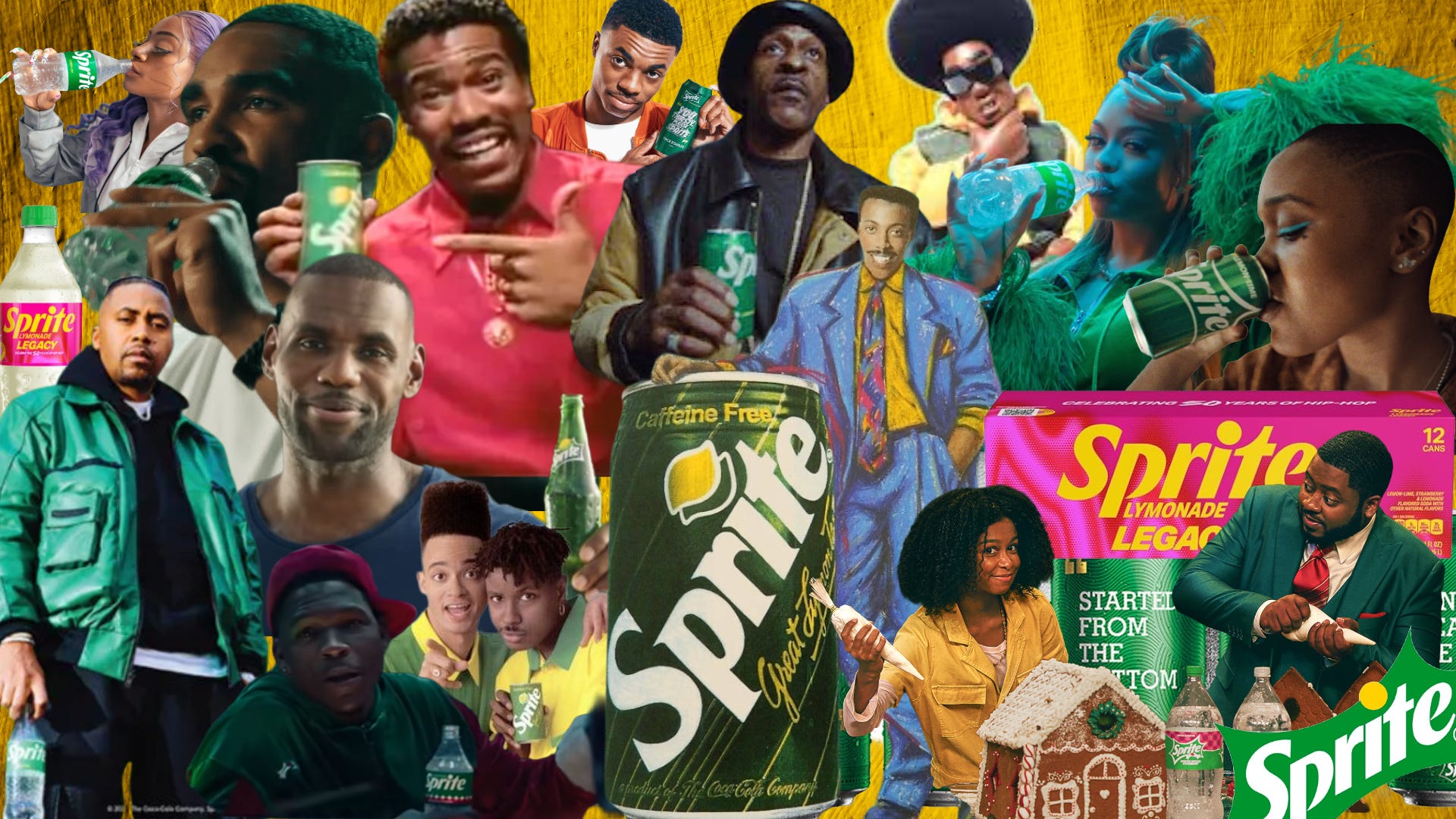
For too many decades big businesses have satiated Black folks with empty calories, with frivolous partnerships making brands like Sprite hip-to-hip with hip hop and Black culture. It is time we demand more. America has given us lemons long enough. We want the limes too. This Juneteenth, we want more than Biggie Smalls and Rakim Sprite cans. This Juneteenth, we demand Sprite™.
***
* Love At The Store by Jerrod Carmichael.
* “If It’s Magic” by Stevie Wonder.
* Selective Outrage by Chris Rock
Yes yes yes! I find the premise of DEI very silly considering how “diverse” colonialism is lol but when you say stuff like that, folks look at you like you hate your fellow negroes 😂
Phew! Good thing Trump wiped out all the DEI shit, huh? 😅😂😶😩
Nah, but really, even as I took advantage of the scramble for representation after 2020, and that brief window in which white deference gave me space to speak with the expectation of actually being heard, I always sensed the hollowness of the whole enterprise.
I'm digging the through line of these essays, grateful for the critique of capitalism from jump. When I read stuff like this, I recognize that we are long overdue for some big "internal" conversations.